

The “16 days” campaign – economic violence
08 12 2025
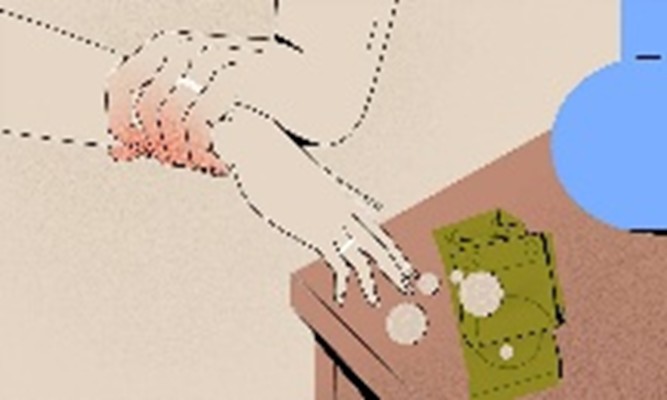
Economic violence is one of the least recognised forms of violence, yet one of the most destructive. It involves taking control of another person’s finances and resources, leading to dependency, isolation and, in effect, often an inability to end the violent relationship. Without being able to dispose of their own resources, the person experiencing violence often has no way of physically leaving – even if the situation threatens their health or life
It does not necessarily occur in isolation from other forms of violence, as it is often part of a broader control – accompanied by psychological violence, threats, isolation and often physical violence.
Economic violence is experienced by between 30% and 50% of women who experience domestic violence in any form [1]. It is one of the most common, yet most difficult, mechanisms of violence to prove, as it is often carried out under the guise of ‘taking care of the family’s finances’, ‘managing money better’ or ‘saving money’.
Its most common manifestation can be taking away access to joint money, taking away wages, discouraging people from taking up employment, creating obstacles to education, or even putting a person into debt without their consent. Economic violence is one of the factors that reduce women’s labour force participation by about 20% [2].
The consequences of economic violence include permanent dependence on the perpetrator, social isolation, impoverishment and loss of career opportunities, deterioration of mental health, and reduced ability to escape from the violent relationship [3].
It is worth remembering that any violence, including economic violence, is unacceptable and constitutes a criminal act. The 2023 amendment to the Polish Domestic Violence Prevention Act explicitly mentions economic violence as a form of domestic violence for the first time. The definition includes, among other things, “abuse of economic advantage, control of financial resources, restriction of access to basic resources”.
Economic violence takes away not only money, but also independence, agency and the ability to make decisions about one’s own life. It is a form of violence that often leaves no visible traces, but the consequences can be just as severe as those of physical violence. Talking openly about economic violence, recognising its mechanisms and making information about support available are key elements of prevention.
————————————————————–
We would like to remind you of reliable sources of information and places where you can find help:
Feminoteka Foundation supporting women experiencing violence, providing free legal, psychological and therapeutic assistance
Feminoteka Foundation women’s helpline 888 88 33 88 free, confidential and professional help offered by Feminoteka Foundation experts to women who have experienced violence
Women’s Rights Centre support for women whose rights are violated, in particular women experiencing violence, free psychological, legal and social assistance, civic and professional advice
Blue line number 800 120 002 free and confidential support of the Polish National Referral Service for Victims of Family Violence “Blue Line”.
Help map – an interactive map of Poland, containing information about places where women can obtain legal, psychological, social support or accommodation, created by the Czas Kobiet Foundation
Information on support institutions at the University of Warsaw can be found here.
—————————————————————–
[1] European Institute for Gender Equality, Gender-based violence: economic violence fact sheet, 2024.
[2] OECD, Society at a Glance 2024: OECD Social Indicators – Violence against women, 2024.
[3] Morgan, A., & Boxall, H., Economic insecurity and intimate partner violence in Australia during the COVID-19 pandemic (ANROWS Research Report 02/2022). Australian Institute of Criminology, 2022.
Ustawa z dnia 9 marca 2023 r. o zmianie ustawy o przeciwdziałaniu przemocy w rodzinie oraz niektórych innych ustaw (Dz.U. 2023 poz. 535) – Domestic Violence Prevention Act